Blog Essay
Rammstein's Zeit and the Five Stages of Grief
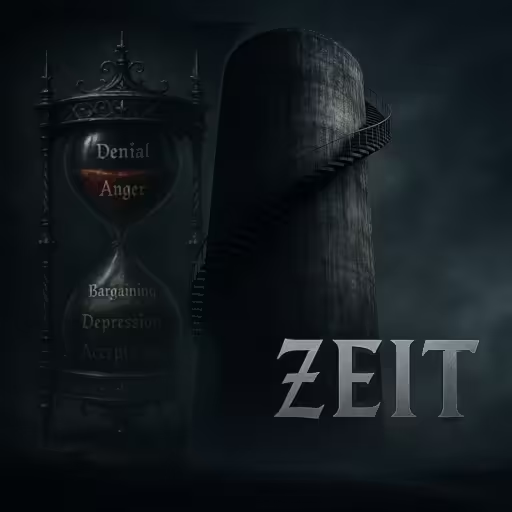
An analysis of Rammstein's 2022 album Zeit, read through the lens of Elisabeth Kübler-Ross's stages of grief, and their ultimate acceptance of death itself.
I believe that Rammstein’s 2022 album Zeit maps the Kübler—Ross grief cycle as responses to death—not breakup, not generic loss. Across the record, the speaker confronts mortality head-on: first numbing and pleading, then lashing out and deal-making, finally sinking into sorrow and arriving at a practiced coexistence with endings. The videos (“Zeit,” “Angst,” “Zick Zack,” “Adieu,” and “Schwarz”) amplify this death-centric arc.
I doubt they intentionally mapped the album to Kübler-Ross in a strict “five stages” blueprint, but I do think they very intentionally made an album about time, aging, death, fear, decay, farewell, and coping—those themes naturally cluster around the Kübler-Ross stages so tightly that the framework feels almost built in. If a band of aging men writes a pandemic-era album called Zeit with songs about time, fear, bodies, tears, sex, surgery, darkness, lies, and goodbye, the grief-cycle shape can emerge naturally.
So it’s not coincidence, but probably not a literal planned KR cycle either.
Rammstein have long staged death, fear, and taboo (“Ohne dich,” “Mein Teil,” the 2019 untitled album’s “Puppe/Zeig dich/Hallomann”), but Zeit turns that lens toward aging, legacy, and letting go. This isn’t a claim about authorial intent so much as a listener’s map: Zeit behaves like a death-work when read through Kübler—Ross—useful even if the band never (consciously) meant it that way.
 A reminder: the model is a framework, not a conveyor belt.
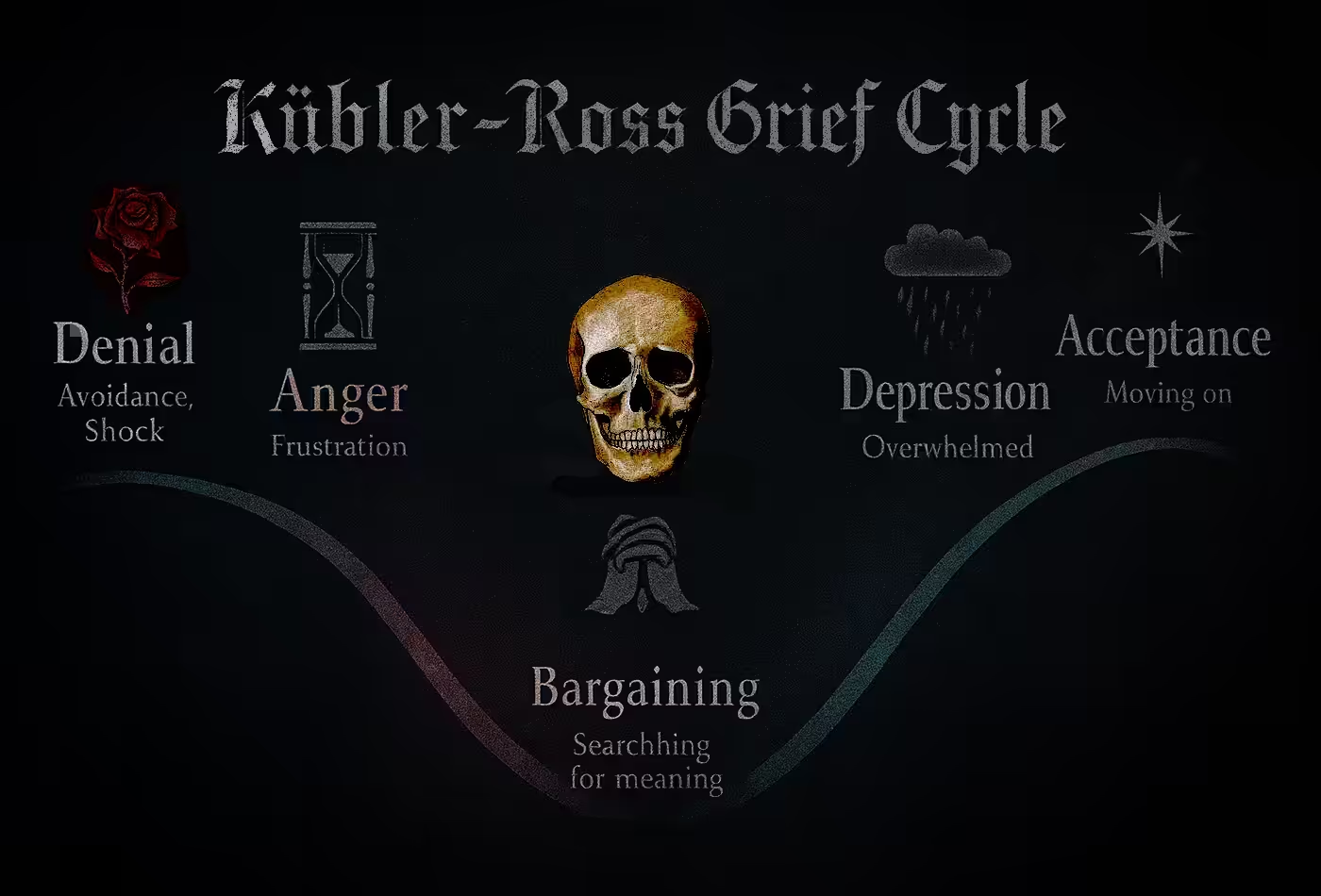
The Kübler—Ross Framework (quick, useful, not linear)
Kübler—Ross described five common responses to loss—denial, anger, bargaining, depression, acceptance—as a way to name what many people experience. Crucially, she later emphasized the stages are not linear; people may skip, repeat, or overlap them. Use the terms as handles, not handcuffs. (Encyclopedia Britannica)
- Denial: a protective “this can’t be happening,” clinging to a preferred reality. (Wikipedia)
- Anger: the protest phase—blame, resentment, lashing out at others or systems. (Wikipedia)
- Bargaining: attempts to strike deals (“if I do X, then Y won’t happen”), including magical thinking or quick fixes. (Encyclopedia Britannica)
- Depression: the slump—withdrawal, sorrow, heaviness when the loss is undeniable. (Lumen Learning)
- Acceptance: not “happy,” but facing reality without resistance; often calmer, ritualized. (Wikipedia)
Denial — “Armee der Tristen” and the denial-image inside “Zeit”
What the stage is: numbing and refusal; we stall reality to spare ourselves.
“Armee der Tristen.” The lyric beckons:
“Komm zu uns und reih dich ein” — Come to us and line up. (Rammstein World)
It’s not just mass sorrow—it’s an invitation to join a march that begins the album’s journey through grief. By recruiting the listener into a disciplined, gray parade, the song acknowledges denial and simultaneously urges a move through it, together. (Affenknecht)
“Zeit.” The plainspoken plea:
“Zeit, bitte bleib stehen” — Time, please stand still. (Affenknecht)
At first glance, the video’s reversal of birth, death, and violence looks like denial made literal: time’s arrow is visually undone. Bodies fall backward, endings rewind, and death appears briefly reversible, as if the image itself could undo what mortality has already done. But the lyric is less denial than bargaining. The speaker does not pretend time has stopped; he begs it to stop. That distinction matters. Denial says, “This cannot be happening.” Bargaining says, “I know it is happening, but maybe I can plead with it.” In that sense, Zeit belongs on the hinge: its images fantasize denial, while its voice bargains with mortality directly.
Anger — “Angst,” “Giftig”
What the stage is: protest and projection; pain becomes aggression and scapegoating.
“Angst.” Germany’s folkloric bogeyman, der schwarze Mann, is a childhood fear that scales into social panic:
“Alle haben Angst” — Everyone is afraid. (Loudwire)
The video’s floodlights, fences, and militias visualize a classic grief move: externalize the hurt, find a culprit, and fortify against it. Anger weaponizes fear; scapegoats stand in for the thing we can’t control. (Affenknecht)
“Giftig.” Intimacy and vulnerability as toxic or fatal:
“Du bist giftig, ach so giftig” — You are toxic, oh so toxic. (Lyrics Translate)
The “poison” motif reframes anger as corrosive attachment—we lash out at the person/place that embodies the wound.
There is also a useful bilingual wrinkle in the title. In German, Angst simply means fear, and the song works on that direct level: social panic, bogeymen, walls, weapons, and contagious dread. But English borrowed angst with a narrower philosophical charge: not just fear of a specific object, but deep, unfocused anxiety about existence, freedom, or the condition of the world. Whether or not the band intended that English echo, it fits the song’s place on Zeit: fear begins as a named bogeyman, then expands into a general atmosphere of existential dread.
Bargaining — “Zeit,” “OK”; the bargaining edge of “Zick Zack”
What the stage is: deal-making and quick fixes; trying to negotiate with loss.
“Zeit.” If Armee der Tristen numbs the listener into the march, Zeit is where grief finds its first clear sentence: please stop. The bargain is impossible, but that is exactly why it belongs here. The narrator is not negotiating with a person, a lover, or even God, but with time itself. He asks the one force that cannot pause to pause anyway.
This makes Zeit the album’s cosmic bargaining song: not “if I behave, death will spare me,” but “if the moment could stay, death would not arrive yet.” The bargain fails before it begins, which is why the song sounds so mournful.
“Zick Zack.” This song sits between denial and bargaining. On the denial side, aging is treated as a technical flaw: breasts too small, skin too slack, fat misplaced, wrinkles available for removal. The body becomes editable material, as if mortality were a bad design problem.
But the chorus keeps the bargain audible:
“Ticktack, ticktack, du wirst alt / Deine Zeit läuft langsam ab” — Tick-tock, tick-tock, you’re getting old / Your time is slowly running out.
That clock turns the surgery into negotiation. Cut enough, lift enough, inject enough, and maybe time can be delayed. The satire is cruel because the bargain is obviously doomed: the body can be altered, but the clock is not impressed.
“OK.” Beyond carnal slapstick, the lyric hints at transactional intimacy and self-medicating grief:
“Du führst mich hinter rotes Licht” — You lead me behind red light. (Affenknecht)
“Red light” signals sex work; read alongside “Viele Löcher zu stopfen” — Many holes to plug—the narrator seeks connection as anesthetic. Excess stands in for solace, a common bargaining tactic: fill every appetite so the void won’t echo—numb the pain. (Lyrics Translate)
Depression — “Meine Tränen,” “Armee der Tristen” (revisited)
What the stage is: heaviness, withdrawal, and sorrow when denial collapses.
“Meine Tränen.” An adult child looks back and learns who he is—grief becomes self-knowledge as inherited stoicism finally breaks:
“Ein Mann weint nur, wenn die Mutter stirbt” — A man cries only when the mother dies. (Lyrics Translate)
The song dismantles that rule by flooding the verses with stifled intimacy and shame—quiet, claustrophobic grief. (Affenknecht)
“Armee der Tristen.” Read here as anhedonia-by-enlistment: a numb, collective march that offers company without direction—togetherness as a way to avoid feeling, not a path forward.
“Hand in Hand, nicht mehr allein” — Hand in hand, no longer alone. (Rammstein World)
A person can take solace in the fact that they’re no longer alone in their pain and suffering.
Acceptance — “Adieu,” “Schwarz”; comic coping in “Dicke Titten”
What the stage is: facing reality without bargaining; often ritualized, sometimes serene.
“Adieu.” A sung rite of parting:
“Kein Wunder wird gescheh’n” — No miracle will happen. “Adieu, goodbye, auf Wiederseh’n.” (Affenknecht)
The video stages a baroque farewell—closure as ceremony. Acceptance here is communal, not solitary. (Wikipedia)
“Schwarz.” Acceptance as chosen night—and as an allusion to death itself. The speaker stops bargaining and selects darkness:
“Die Nacht ist wunderschön / Ich will nicht schlafen geh’n” — The night is beautiful / I don’t want to go to sleep. (Affenknecht)
Reframing sunset as pleasure, not catastrophe—
“Der Sonnentod ist mir Vergnügen” — The sun’s death is my delight— turns the day’s “mini-death” into a ritual one can savor. No miracle talk, no if/then deals—just no more protest.
Jungian read: the song enacts shadow integration. Instead of moralizing darkness, it’s welcomed and metabolized:
“Trink’ das Schwarz in tiefen Zügen” — Drink the black in deep draughts. (Affenknecht) Integration here isn’t endorsing vice; it’s ending the pretense that light alone can save us.
The nocturnal “tribe” first works as a shadow-community:
“Die Nacht hält vielen ihre Brust / Trinker, Huren und Verschwörer.”
Drinkers, whores, and conspirators are not presented as role models so much as people who belong to what daylight excludes. Pushed into the album’s death-work frame, that community also hints at mortality’s equalizing force: respectability fades, status thins out, and everyone eventually enters the same dark. Night becomes caregiver (hält ihre Brust), not merely threat.
“Dicke Titten.” This is not acceptance in the same solemn sense as Adieu or Schwarz. It is more like comic, bodily coping: aging desire reduced to a crude wish-list, loneliness answered with fantasy, mortality heckled by appetite. The song works as pressure-valve grief—vulgar, funny, pathetic, alive. It does not solve anything, but it refuses to become solemn just because the album is death-haunted.
“Ich will eine Frau … Dicke Titten” — I want a woman … big boobs. (Lyrics Translate)
Visuals and the Arc
- “Zeit” runs births and deaths in reverse; denial appears as the fantasy of reversal, while bargaining speaks through the plea for time to stand still. (Wikipedia)
- “Angst” shows grief’s anger stage turning fear into militias and scapegoats. (Loudwire)
- “Zick Zack” caricatures bargaining with youth culture through self-surgery. (Wikipedia)
- “Adieu” renders acceptance as ritual farewell. (Wikipedia)
- “Schwarz” not only accepting death (or one’s fate), but embracing it utterly (genius.com).

Caspar David Friedrich, Wanderer above the Sea of Fog, 1818 signals the album’s existential mood—one figure facing the abyss of time.
| Stage of Grief | Primary Songs | Secondary / Overlap Songs | Justification / Reasoning |
|---|---|---|---|
| Denial | Armee der Tristen, Zick Zack | Zeit | Armee begins in numbness, gray collectivity, and emotional enlistment. Zick Zack denies aging by treating the body as editable material: cut, lift, inject, remove, repeat. Zeit deserves an honorable mention because parts of the video reverse birth, death, and violence, as if the image could undo mortality itself. |
| Anger | Angst, Giftig | — | Angst turns fear into social panic, projection, fortification, and scapegoating; its English resonance as existential “angst” deepens the dread beyond one specific threat. Giftig turns vulnerability into poison: intimacy becomes threat, and hurt becomes accusation. |
| Bargaining | Zeit, OK | Zick Zack, Dicke Titten | Zeit is bargaining at the cosmic level: the speaker knows time is moving and pleads for it to stand still. OK bargains with emptiness through appetite and sex. Zick Zack overlaps because cosmetic surgery becomes a desperate negotiation with aging: if enough flesh is corrected, maybe time can be delayed. |
| Depression | Meine Tränen | Armee der Tristen, Zeit | Meine Tränen is the clearest collapse into sorrow and inherited emotional repression. Armee can be reread as collective anhedonia; Zeit carries the mournful awareness that bargaining will fail. |
| Acceptance | Adieu, Schwarz | — | Adieu accepts parting without miracle. Schwarz accepts darkness as sanctuary, temptation, shadow, and mortality: not despair, but coexistence with what cannot be changed. |
| Grotesque / comic coping | Dicke Titten | OK, Zick Zack | These songs refuse clean solemnity. They show grief passing through the body: lust, surgery, vulgarity, appetite, vanity, and absurdity. |
Conclusion
The strongest evidence for intentional death-work is everywhere. The title track’s video is explicitly allegorical about death and the passage of time, with imagery of birth, the Grim Reaper, and time swallowing the band; contemporary writeups also read the song as a memento mori / transience piece. (Wikipedia) Reviews at the time repeatedly described the album as unusually solemn, melancholic, and centered on time/mortality. (Sputnikmusic)
It opens by mustering numb ranks (Armee der Tristen), then begins bargaining with the clock itself (Zeit): if time would only stop, mortality might be held off a little longer. From there it flares into scapegoating fear (Angst) and poisoned attachment (Giftig), denies and bargains with aging through flesh, pleasure, and grotesque bodily comedy (Zick Zack, OK, Dicke Titten), slumps into inherited sorrow (Meine Tränen), and arrives at ritualized coexistence with endings (Adieu, Schwarz). “Schwarz” is the destination: the self stops arguing with death and learns to drink the dark. Taken together, the record doesn’t just reference grief—it rehearses how adults might live with mortality: not by outwitting it, but by integrating what can’t be changed. (Wikipedia)
Sources & Further Reading
- Lyrics/translations (for brief quoted lines): “Zeit,” “Armee der Tristen,” “Angst,” “Giftig,” “Zick Zack,” “OK,” “Meine Tränen,” “Schwarz,” “Adieu,” “Dicke Titten.” (Affenknecht)
- Song/video context: Wikipedia single pages and album page. (Wikipedia)
- Framework: Britannica entry and Kübler—Ross Foundation; non-linearity emphasized. (Encyclopedia Britannica)